TRIUMPH T2205167-1 Exhaust Sensor Triple R/rs 765
fits model: Rs, Street. make: Triumph. year: 1926–2023.
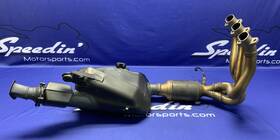
( Type: Exhaust System ), ( Ipn: T2205167-1 ), ( Machine Type: Street Motorcycle ), ( Color: Black ), ( Country Of Origin: United Kingdom ), ( Placement On Vehicle: Exhaust ), ( Performance Part: No )
Review TRIUMPH Exhaust Assembly Without Sensor Triple R/rs Oem fits STREET RS 1926–2023
The Triumph Street Triple R/RS (R125, R660, and R1000 models) features a **Triumph T2205167-1 OEM exhaust sensor**, a critical component designed to ensure optimal engine performance, emissions compliance, and fuel efficiency. This high-quality, factory-specified sensor is engineered to monitor oxygen levels in the exhaust gases, providing real-time feedback to the engine s ECU (Electronic Control Unit) to maintain precise air-fuel ratios. Crafted from durable, corrosion-resistant materials, the sensor is built to withstand the demanding conditions of high-performance sportbikes, delivering reliable operation even under aggressive riding conditions. Its robust construction ensures longevity, reducing the risk of premature failure and maintaining peak performance across the 2023 to 2026 model years. The sensor s precise measurements help the ECU optimize fuel injection timing, throttle response, and power delivery, enhancing both throttle feel and overall engine efficiency. Whether you're cruising on the open road or pushing the limits on the track, this OEM-grade sensor ensures your Street Triple R/RS operates at its best, adhering to emissions standards while maximizing power output. Ideal for riders who demand both performance and reliability, this sensor is a seamless replacement for worn or faulty units, restoring factory performance with ease.
Buying the Triumph T2205167-1 exhaust sensor (OEM part for the Street Triple R/RS, model years 23-26) is a straightforward upgrade for maintaining or restoring proper emissions functionality. Below is a detailed breakdown of its pros and cons, followed by a conclusion and recommendation.
---
**Pros:**1. **OEM Quality and Fitment** This is a genuine Triumph part, meaning it is designed specifically for the Street Triple R/RS (2023-2026 models). It ensures a perfect fit without modifications, reducing the risk of installation errors or compatibility issues. OEM parts are also built to the same standards as the original equipment, ensuring durability and reliability.
2. **Emissions Compliance** The exhaust sensor (also known as an oxygen sensor or O2 sensor) is critical for the bike s emissions system. A faulty sensor can trigger check engine lights (CEL) or cause the ECU to run in "limp mode," restricting performance. Replacing it with an OEM part ensures the bike meets emissions standards and avoids potential legal or registration issues.
3. **Reliability and Longevity** OEM sensors are typically made from high-quality materials and undergo rigorous testing. While they may not last indefinitely, they are less likely to fail prematurely compared to aftermarket alternatives of unknown quality. This reduces the likelihood of repeated replacements or unexpected failures.
4. **Warranty Coverage** Purchasing from an authorized Triumph dealer or a reputable seller often includes a warranty, providing peace of mind. If the sensor fails within the warranty period, you can return it for replacement or refund, minimizing financial risk.
5. **Simplified Installation** Since it is an OEM part, the installation process is well-documented, and tools required are standard. Most riders with basic mechanical skills can replace it themselves, saving labor costs. Triumph s documentation and community resources (e.g., forums, videos) make the process accessible.
6. **Consistency with Factory Performance** The sensor is calibrated to work seamlessly with the bike s ECU. Aftermarket sensors may not provide the same level of accuracy, potentially leading to suboptimal fuel mixture, reduced power, or increased fuel consumption.
7. **Resale Value** Keeping the bike stock or using genuine parts can preserve its resale value. Buyers often prefer bikes that have been maintained with OEM components, as it reduces uncertainty about long-term reliability.
---
**Cons:**1. **Higher Cost Compared to Aftermarket** OEM parts are generally more expensive than aftermarket alternatives. While the price difference may not be significant for a single sensor, it can add up when considering other OEM upgrades. For budget-conscious buyers, aftermarket sensors (from trusted brands like NGK, Bosch, or Denso) may offer comparable performance at a lower cost.
2. **Limited Customization** The OEM sensor is not designed for performance tuning or aggressive riding conditions. If you plan to modify the bike (e.g., exhaust, ECU tuning, or high-performance riding), an aftermarket sensor with extended durability or enhanced performance characteristics might be preferable.
3. **Potential for Counterfeit Parts** Purchasing from unauthorized sellers or third-party platforms carries the risk of receiving counterfeit or low-quality parts. Always buy from reputable dealers or verified sellers to avoid this issue. Triumph s official website or authorized dealers are the safest options.
4. **Replacement Frequency** Oxygen sensors are consumable parts and may need replacement every 60,000 100,000 miles, depending on riding conditions. While this is true for both OEM and aftermarket sensors, the cost of frequent replacements can be a consideration, especially if you ride aggressively or in harsh environments (e.g., dusty or humid conditions).
5. **Limited Availability Outside Dealerships** While not a major issue for most riders, OEM parts may not be as widely stocked as aftermarket options. This could require ordering in advance or waiting for delivery, depending on the seller.
6. **No Performance Benefits** Unlike some aftermarket sensors designed for high-performance applications, the OEM sensor does not offer any power or tuning advantages. If your primary goal is to improve performance, an aftermarket sensor may not justify the cost.
---
**Conclusion:**The Triumph T2205167-1 exhaust sensor is a practical and reliable choice for riders who prioritize OEM quality, emissions compliance, and ease of installation. It is ideal for those who want to maintain the bike s stock specifications, avoid check engine lights, and ensure long-term reliability without unnecessary complexity. However, if budget is a concern or you plan to modify the bike aggressively, an aftermarket sensor from a reputable brand may offer a more cost-effective solution without sacrificing performance or durability.
---
**Recommendation:** Buy the Triumph T2205167-1 exhaust sensor if:- You want to replace a faulty sensor and restore emissions compliance.
- You prefer OEM parts for reliability and warranty coverage.
- You are comfortable with the higher cost and want to maintain the bike s stock integrity.
- You plan to keep the bike in its stock configuration without aggressive modifications.
Consider an aftermarket alternative if:- You are on a tight budget and can find a high-quality aftermarket sensor (e.g., NGK 97506232 or Bosch 0280206536) that fits your needs.
- You plan to modify the bike (e.g., exhaust, ECU tuning) and want a sensor that can handle higher stress.
- You ride frequently in extreme conditions (e.g., dust, off-road) and want a sensor with extended durability.
For most riders, the OEM sensor is the safest and most straightforward choice, especially when purchased from an authorized dealer. Always verify the part number and compatibility with your specific model year before purchasing.
Details:
It is in like new condition with only small cosmetic wear from being removed the motorcycle. Document the condition: Take clear photos of damaged packaging and keep all original materials. Follow Carrier Instructions: Complete the claim process as required by shipping provider. It was a brand new showroom model, and the only mileage it saw on Dino for break-in.
However, large, heavy, or fragile items may not be eligible for combined shipping due to the risk of damage. The proper steps to take for damaged packages are below. Please, examine and verify the condition of items when received. This exhaust assembly was removed from a 2025 Street Triple RS.
part #: t2205167-1 prices
- $160.00-$294.99
specifications cyclemufflermo:
- for models: Rs, Street
- for makes: Triumph
- for years: 1926-2023
- type: Exhaust System
- ipn: T2205167-1
- machine type: Street Motorcycle
- color: Black
- country of origin: United Kingdom
- placement on vehicle: Exhaust
- performance part: No
general cyclemufflermo:
- Motorcycle Scooter Parts Accessories > Exhaust Emission Systems > Silencers, Mufflers Baffles
- condition: Used
seller cyclemufflermo:
- # reviews: 1331
- rating: 99.7%
- city: Farmington, New Mexico
returns cyclemufflermo:
- paid by: Seller
- time: 30 Days
- policy: Returns Accepted
shipping cyclemufflermo:
- service: Economy
- class: Economy
- cost: $0.00
- transit: 3-9 Days
- type: Fixed
payments cyclemufflermo:
- wallet: Apple-pay
- credit card: Visa
- other
offer cyclemufflermo:
- sold: 0
- best offers: True
- availability: In Stock
- started: March 11, 2026
- options: Ship-to-home
- quantity: 1
Triumph Is Similar To:
- 005-2590407v Two Brothers Racing Triumph Tiger Exhaust Pipe Muffler Slip On (33.8% similar) Two brothers M-2 vale slip-on exhaust triumph tiger 1050 features: variable axis locking exhaust spiral-wound perforated core black Teflon coated magnesium end-cap rubber-lined clamp PX1 sound db killer insert included made in USA...(November 17th, 2018)
- 005-3580405-s1 Two Brothers Racing Exhaust Carbon Fiber Muffler Triumph Daytona (29.3% similar) Free shipping quoted rates to the USA apply continental 48 only. Please view the parts compatibility section above, and use drop down boxes to choose your vehicle year, make model for specific results. Please for a shipping quote to these locations. In rare instances, due to inventory fluctuation, ...(March 8th, 2018)
- 005-3980407-s1b Two Brothers Racing Black Muffler Carbon Triumph Street Triple (25.8% similar) Note: image is for reference only, actual product may vary slightly depending on your specific application...(March 24th, 2018)
- 02241720 Triumph Sprint Muffler Exhaust Pipe (31% similar) Fitment removed from: triumph sprint condition light wear throughout. Items ship using ups ground, USPS priority mail, or FedEx. Dimensions inlet inches outlet inside this offer only includes that which is shown in the photos above. Few scratches and scuffs. Used triumph muffler. Shipping us...(February 27th, 2017)
- Triumph Oem Cans 0miles 2005 Triple Speed (38.1% similar) Here is a set of new oem triumph silencers off 2005 speed triple. Feel free to ask questions. Perfect new condition comes as pictured freshen up your bike for cheap as these are priced to sell...(January 9th, 2015)
- 138588 Mufflers Triple 2011 Exhaust Triumph 11 Speed Pipes (30.8% similar) Will not release part until it is paid in full. Only serious bids. Small dents and scratches. Thanks it is being sold as is with no warranty. Shows wear from normal use unless stated otherwise...(January 10th, 2015)
- Exhaust 139411 Pipe Tiger 1050 10 Muffler 2010 Triumph (27.3% similar) Shows wear from normal use unless stated otherwise only serious bids. This is from a 2010 triumph tiger dents. Will not release part until it is paid in full. Thanks it is being sold as is with no warranty. Items may be disassembled for shipping purposes...(January 10th, 2015)
- 141454 Triumph Pipe Muffler Triple Speed Exhaust (31.6% similar) Slightly scratched only serious bids. Will not release part until it is paid in full exhaust pipe from a 2000 triumph speed triple. Shows wear from normal use unless stated otherwise...(January 28th, 2015)
- 19680bp520 Yoshimura Alpha Exhaust Works Finish Triumph Street Triple (37.7% similar) 1 the high-quality of Chimera exhaust systems and slip-on mufflers are a direct result company...(May 31st, 2018)
- 2000-2001 955i Xb08 Speed Daytona Muffler Extremeblaster Exhaust Triumph Triple (25.6% similar) Note this item is brand new, never used. Exhaust is not ready made to ship. As seen in the photo. New USA made Dixon valve heavy duty bolt clamps. Search triumph Dayton extreme blaster exhaust XB08 in you tube for a sound clip and look for my channel Levesque's. Custom made to fit in the USA. All hi...(December 26th, 2014)
- Triple Muffler 2008-08 Triumph Pipe 141275 Exhaust Left Street (38.1% similar) This is from a 2008 triumph street triple. Shows wear from normal use unless stated otherwise. Will not release part until it is paid in full. It is being sold as is with no warranty. Left muffler...(December 27th, 2014)
